The Ultimate Guide to Creating Effective Teacher Plans
Let’s talk planning. Most teachers would agree that taking time to plan is essential in creating effective lessons. However, not all teachers enjoy the process. It can be time-consuming, messy, and frustrating even. With the right tools and techniques, though, you can create a plan that doesn’t take up all of your free time (what is free time anyway?) and will actually make future planning even easier.
Set yourself up for successful planning this year using these strategies:
Layer your plans. Start broad (think year plan) and work your way through to your more specific plans. Begin with your school district schedule (ie. accounting for days off). Add in your classroom themes or holidays you’d like to incorporate. Then get into the “meat” which is the curriculum or outcomes you need to teach, and lay them out on top of your year plan. From there, you can get into unit plans, weekly plans, and finally ideas for specific lessons.
General plans are a great place to start. If you feel overwhelmed planning for a new grade or subject, go back to basics. Name the general topics you need to cover and spread them over the year. Decide on the order you’d like to teach them in, and that will give you a focus for the beginning of the year.
Be flexible. Teachers are amazingly adaptive. We frequently change plans on a dime (which - let’s be honest - can be annoying at times, especially when we have put a lot of effort into our plans). One thing that I recommend to avoid this frustration as much as possible is to account for changes. Leave flex space in your weekly schedule, don’t over-plan or try to squeeze in too many activities into a short period of time, and leave space in your planner to jot down things that will be carried over to another time/day. I’m also a big fan of drawing arrows into my weekly plan when plans need to be moved ahead.
Planner Types:
Year Planner - A broad overview of a whole school year. Usually, this is broken down into 10-12 months, utilizes both columns and rows, and outlines the general units or topics and when you will teach them.
Unit Planner - A subject and unit specific planner that breaks down the unit into outcomes and the activities you will use to teach them. Typically, this includes assessment ideas for each outcome as well.
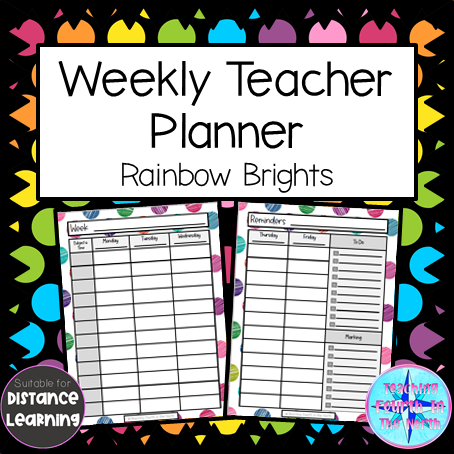
Weekly Planner - A week-at-a-glance planner with your timetable scheduled in. This planner allows for activities/outcomes/lesson ideas to be jotted into specific places in the timetable, and will keep you on pace to complete your unit plans and year plans.
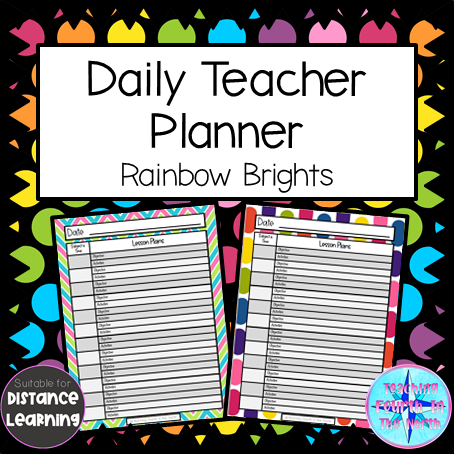
Daily Planner - A super detailed plan of the outcomes, activities, and assessments that you will carry out. Often this includes length of activities and times as well.
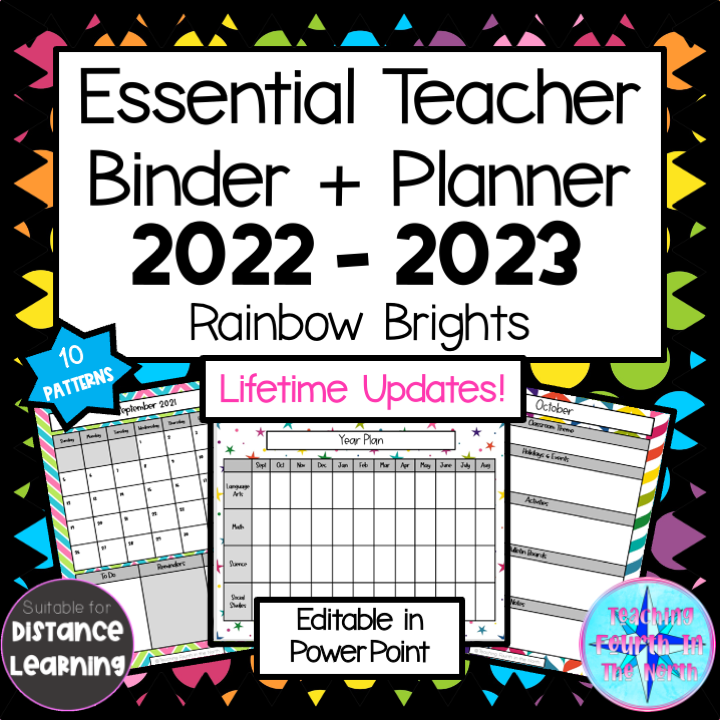
Here are some of my favorite planners. These have helped me to get a grasp on what I’m teaching and allowed me to relax a little knowing that I have it all laid out.